Annabella australiensis Fryar, Haelew. & D.E.A. Catches.
Dedicated to my amazing friend Annabelle Daniel for her work on establishing and running women’s shelters.
Fryar, SC; Haelewaters, D; Catcheside, DEA. 2019. Annabella australiensis gen. & sp. nov. (Helotiales, Cordieritidaceae) from South Australian mangroves. Mycological Progress. 18(7):973-981
Saprobic on attached, decorticated, dead branch of Avicennia marina (Forssk.) Vierh. (Lamiales, Acanthaceae) in the upper intertidal region.
Sexual morph:
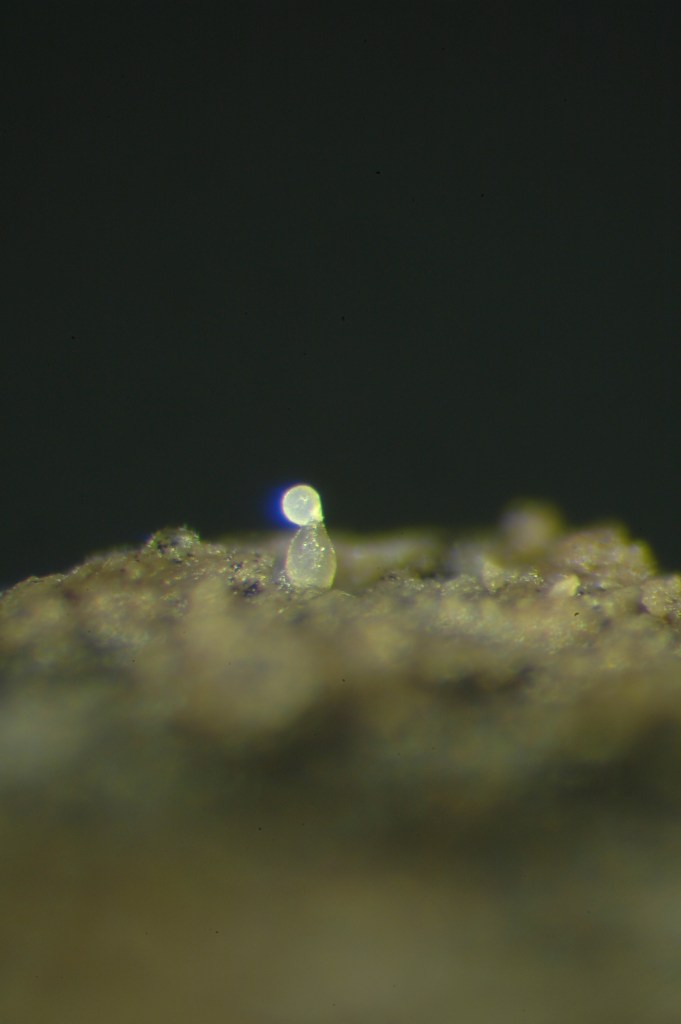
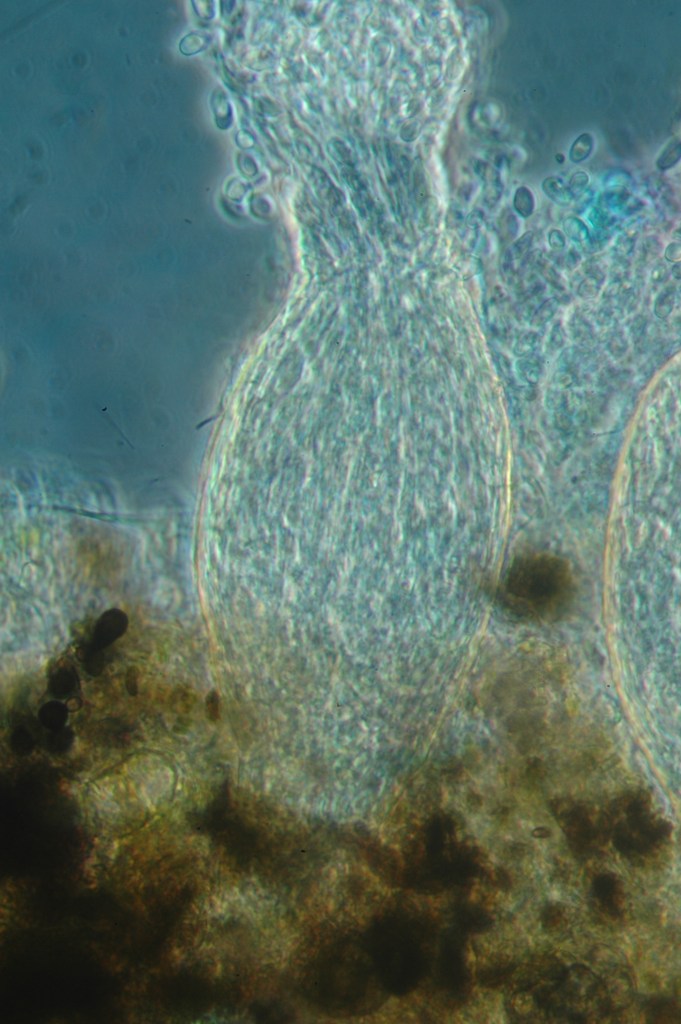
Ascomata minute, apothecial, hyaline to pale yellowish, superficial, perithecioid, with a broad ostiolar opening when mature, solitary or gregarious, (175)188–225(250) μm high, (88)100–123(188) μm diam. (x = 210×123 μm, n = 8), initially closed, then opening to a maximum of 100 μm wide, tissues not ionomidotic.
Ectal excipulum thin, composed of cells of textura angularisepidermoidea ((6)9–20(30) × 4 – 13 μm, x = 15 ×7 μm, n = 20).
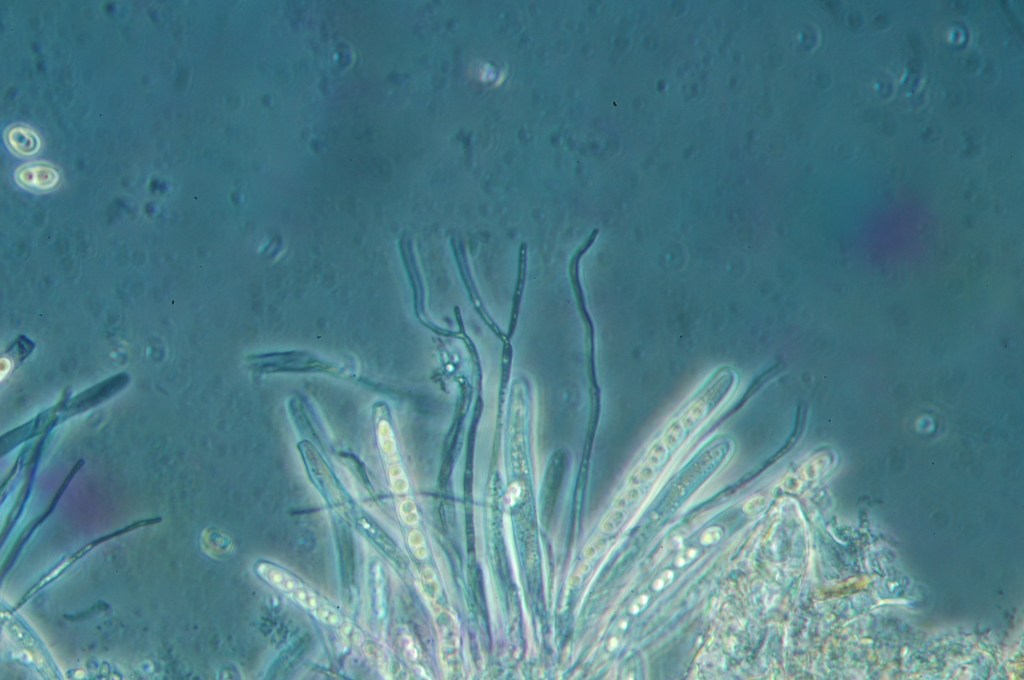
Paraphyses septate, hyaline, 1.5–2.5 μm wide (x = 2 μm, n = 9), sparsely branched (mostly unbranched, occasionally forked towards the tip), protruding beyond the asci, growing fromsubhymenium, upper ends free.
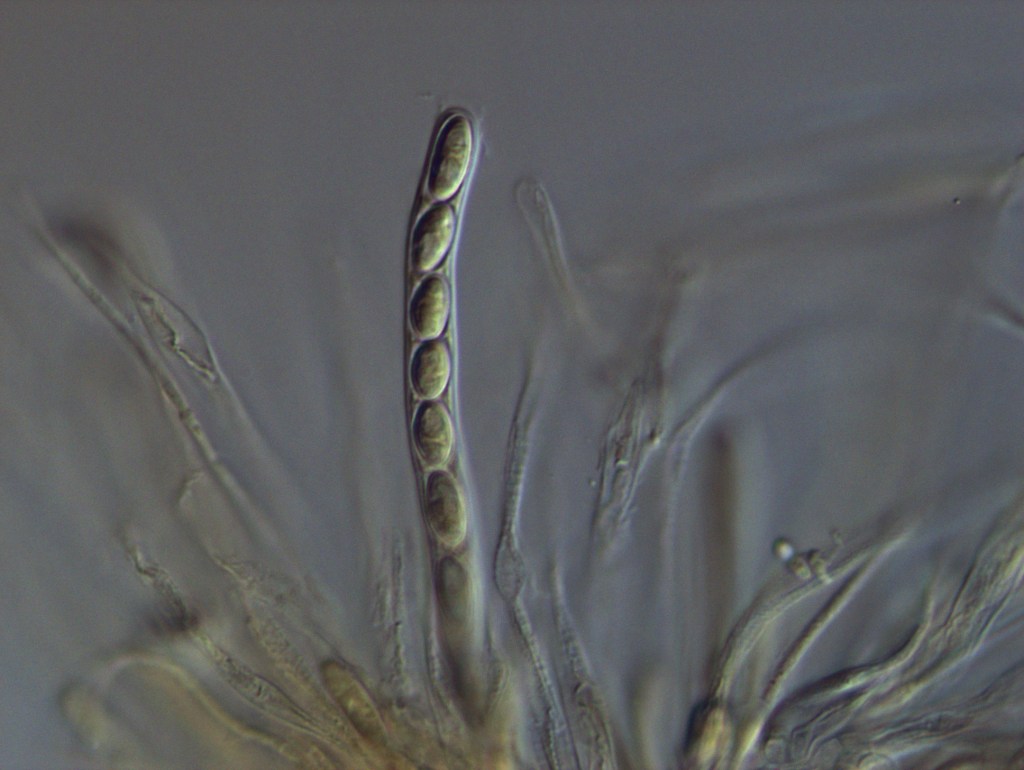
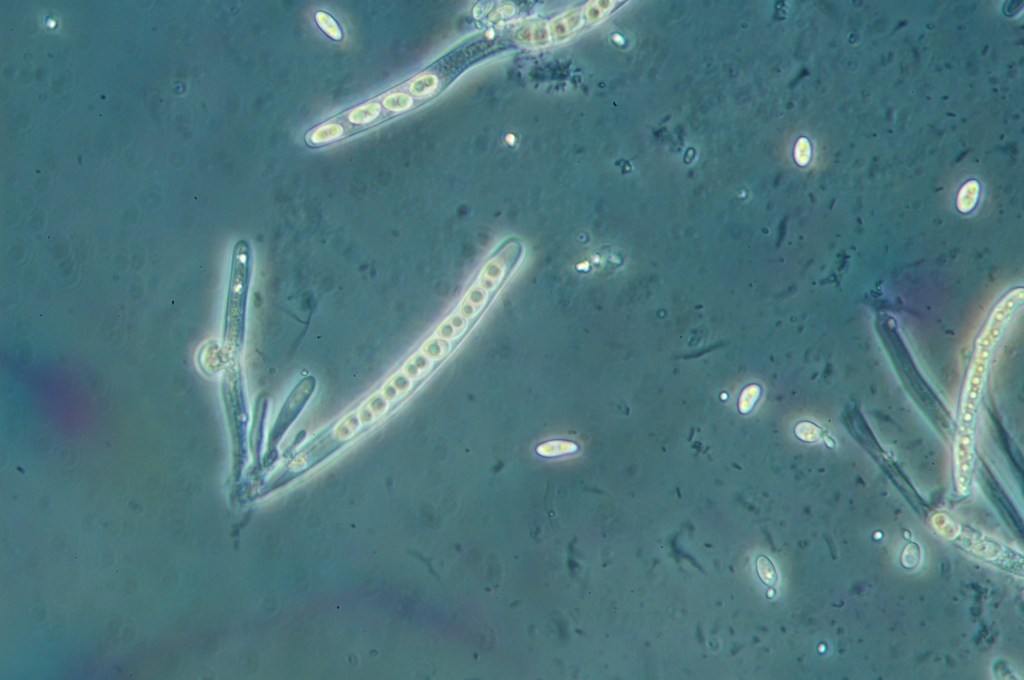
Asci 8-spored, cylindrical, unitunicate, arising from croziers, ascospores uniseriate, no apical wall thickening or ring structure, rounded apices, inamlyoid, ascospores expelled through a split at or near the apex, (72.5)80–130(150) × (5)6–7.5(9) μm (x = 99 × 7.5 μm, n = 22), contents turning rusty-red in Melzer’s reagent and faintly yellow/brown in Melzer’s reagent when pretreated with 2–5% KOH, ascus wall inamyloid.
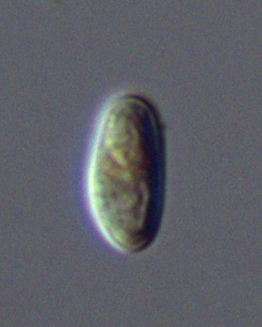
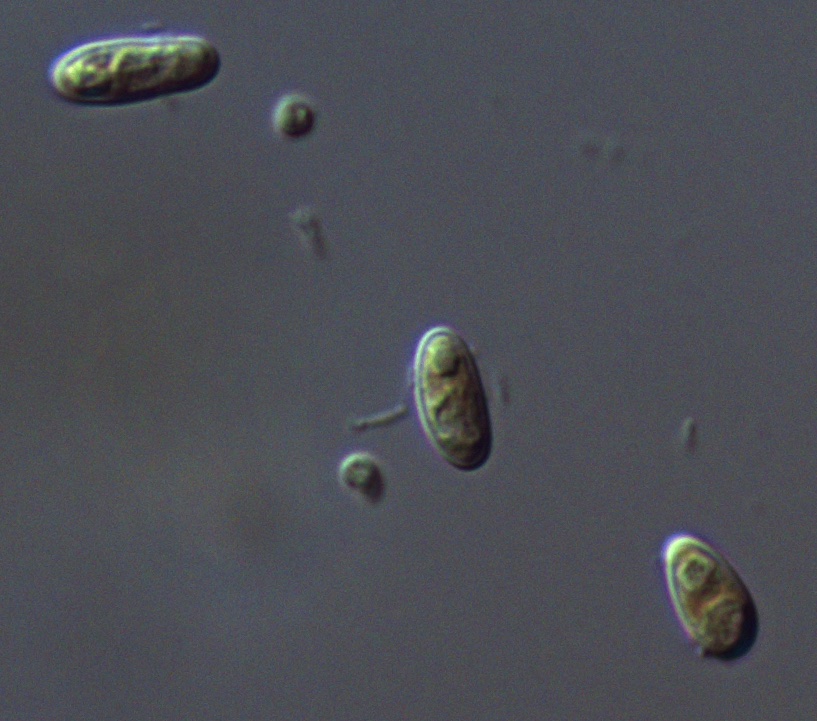
Ascospores not overlapping in the asci and straight, highly variable in shape, ellipsoid to fusoid to oblong, hyaline, two, occasionally one large oil drop per ascospore, aseptate, (7.5)9–14(17.5) × (4)5–6(7.5) μm (x = 11 × 5.5 μm, n = 30), no appendages or sheath, sometimes budding outside the asci.
Asexual morph: undetermined.
 Australian freshwater and marine fungi